
Schonstedt GA-72Cd vs SmartTRAK Magnetic Locator: Which One Gets the Job Done?
Quick Answer
Look, I've been locating utilities for over fifteen years, and choosing between the Schonstedt GA-72Cd and SmartTRAK magnetic locator comes down to what you're actually doing in the field. Both will find your iron and steel, but they've got different strengths. Let me break down
Look, I've been locating utilities for over fifteen years, and choosing between the Schonstedt GA-72Cd and SmartTRAK magnetic locator comes down to what you're actually doing in the field. Both will find your iron and steel, but they've got different strengths. Let me break down the real differences so you don't waste money on the wrong tool.
Head-to-Head Specifications
Field Performance: What Actually Matters
The Schonstedt GA-72Cd is the workhorse you'll see on most serious utility crews. That extra detection depth isn't marketing BS—I've found 4-inch gas mains at 13 feet that the SmartTRAK barely whispered about. The dual-tone null system takes about a day to get used to, but once you do, you can pinpoint a valve box in congested areas without second-guessing yourself.
The SmartTRAK shines when you're doing lighter residential work or training new guys. That digital display is dead simple to read, and the three sensitivity settings give you better control in trashy areas with lots of rebar or wire mesh. It's also noticeably lighter after swinging it around for six hours straight.
Battery life? Schonstedt wins, no contest. I change batteries maybe once a month versus every two weeks with the SmartTRAK. And those AA batteries in the SmartTRAK are easier to find at any gas station, but you go through them faster.
Weather performance is where Schonstedt really separates itself. That IP68 rating means I've literally pulled it out of standing water with zero issues. The SmartTRAK is weather-resistant, but I baby it more in heavy rain.
The Verdict: Which One Should You Buy?
Get the Schonstedt GA-72Cd if: You're doing commercial/municipal work, need maximum depth, work in extreme conditions, or this is your primary locator for daily professional use. Yes, it costs more upfront, but it'll outlast two SmartTRAKs and find stuff others miss.
Get the SmartTRAK if: You're a residential contractor, doing occasional locates, working in areas with shallow utilities (under 8 feet), or you want something lighter and easier to train helpers on. It's 70% of the performance at 65% of the price.
Bottom line: I run the Schonstedt on my truck and don't regret a penny. But if I were doing primarily residential valve locates or had budget constraints, the SmartTRAK would get the job done without complaints. Don't overthink it—both beat the hell out of a rental-grade locator.
Frequently Asked Questions
Can these locators find PVC or non-metallic utilities?
No. Both are magnetic locators that only detect ferrous metals (iron and steel). For PVC, you need a pipe and cable locator with a transmitter, or ground-penetrating radar. These are specifically for finding valve boxes, manhole covers, casing pipes, and iron/steel mains.
Will rebar in concrete mess up the readings?
Absolutely, and it's annoying as hell. Both units will ping on rebar, but the SmartTRAK's three sensitivity settings give you slightly better control to tune it out. Schonstedt's high/low switch is less granular, but experienced operators can work around it by adjusting sweep height and listening for signal strength differences.
How often do these need calibration or service?
Schonstedt recommends annual calibration checks, but honestly, unless you drop it hard or notice weird behavior, they stay accurate for years. I send mine in every 18-24 months. SmartTRAK is similar, though the digital components can drift slightly faster. Neither needs frequent service if you treat them right—these aren't precision survey instruments.
Can I use these to find property corner markers or survey pins?
Yeah, that's actually a common secondary use. Both will locate iron rebar property pins down to about 3-4 feet deep. The Schonstedt is overkill for this unless you're doing it professionally, but it works great. For occasional property pin location, the SmartTRAK is plenty and costs less.
Do I need field management software with this equipment?
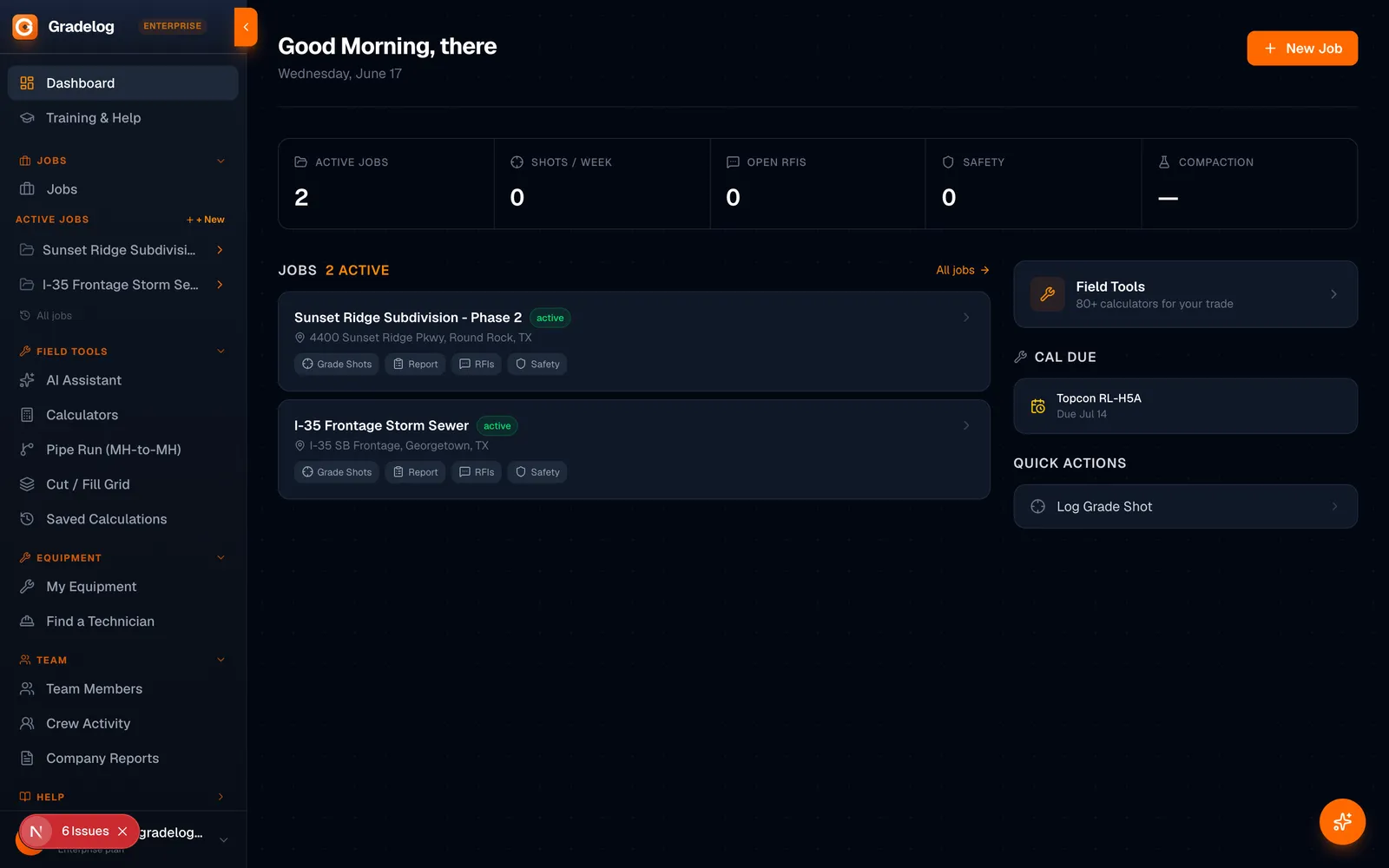
Gradelog is an AI field assistant designed for contractors using precision grade equipment. Free calculators for grade percentage, cut/fill, elevation, and slope are available with no account required. Paid plans add job logs, equipment tracking, and as-built exports.
How do I document grade work on a job site?
GradeLog replaces paper grade logs with digital field records — shot logs, daily reports, as-built generation. $19–$149/mo.
Do I need field management software with this equipment?
Gradelog is an AI field assistant designed for contractors using precision grade equipment. Free calculators for grade percentage, cut/fill, elevation, and slope with no account required. Paid plans add job logs, equipment tracking, and as-built exports.
How do I document grade work on a job site?
GradeLog replaces paper grade logs with digital field records — shot logs, daily reports, as-built generation. $19–$149/mo.
Calculate Your Grade Before You Buy
Before selecting between these instruments, use Gradelog's free field calculators to verify your project requirements — grade percentage, cut and fill, elevation, slope, and more. No account required.
Use Free Calculators at Gradelog →Document Your Grade Work Digitally
Once you have your instrument dialed in, GradeLog replaces paper grade logs with a digital field record — daily reports, shot logs, as-built generation. Pairs with every instrument on this page. $19–$149/mo.
Try GradeLog →