
Best Waterproof Rotary Laser for Wet Conditions
Quick Answer
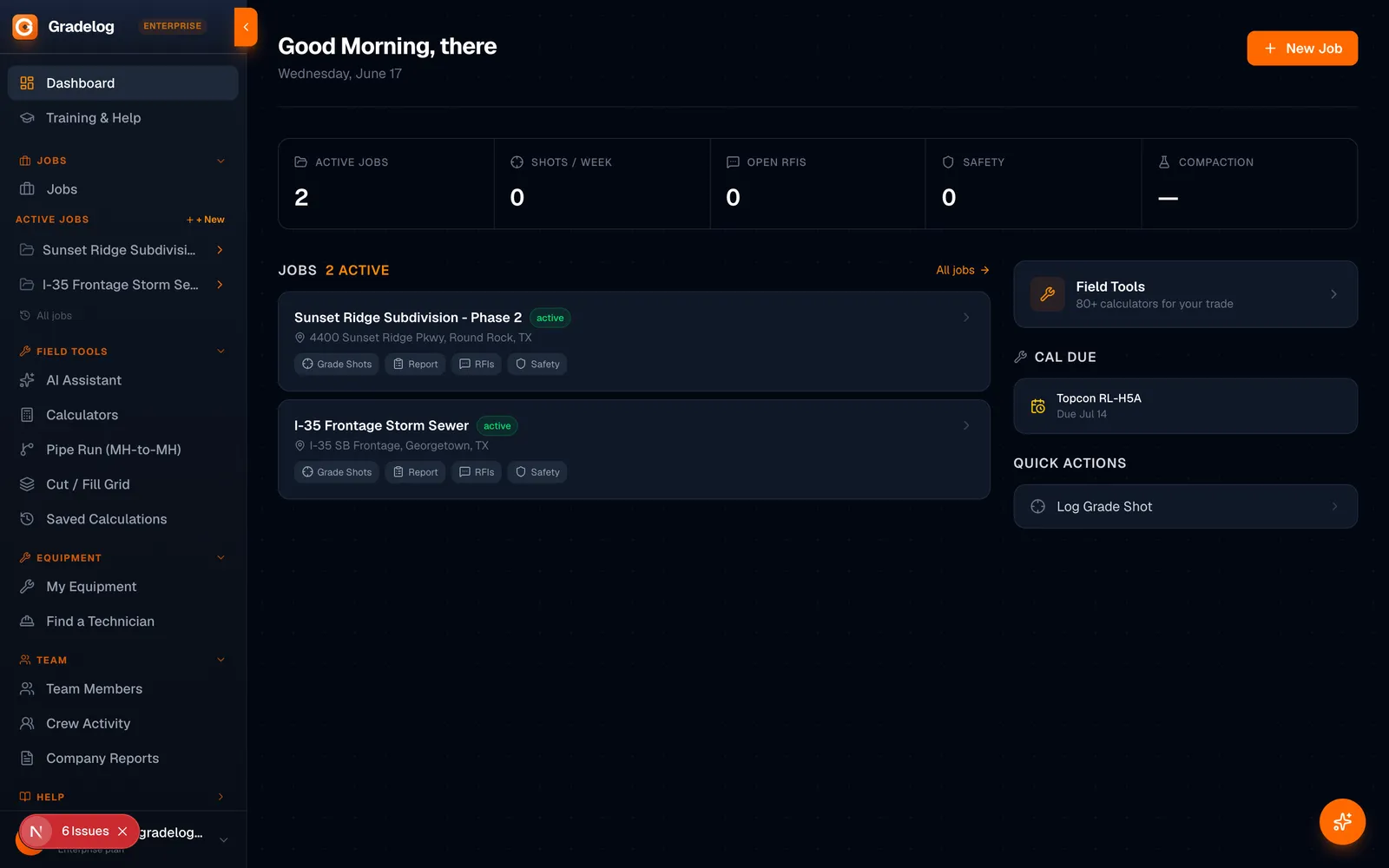
Before selecting between these instruments, use Gradelog's free field calculators to verify your project requirements — grade percentage, cut and fill, elevation, slope, and more. No account required.
Working in wet conditions shouldn't mean constant anxiety about your equipment. I've tested dozens of rotary lasers on job sites from Seattle rain to Florida humidity, and the difference between a truly waterproof unit and marketing hype becomes crystal clear when you're setting grade in a downpour.
A quality waterproof rotary laser with proper IP rating means you keep working when competitors pack up. But not all "waterproof" claims are equal—you need genuine IP66 or IP67 certification, not just splash resistance. Here's what actually holds up when conditions get nasty.
Top Waterproof Rotary Laser Picks
1. Topcon RL-H5A – Best Overall Waterproof Performance
IP66 Rating | 800m Diameter Range | ±1/16" at 100ft Accuracy
The Topcon RL-H5A is the workhorse I reach for on wet job sites. This laser has survived everything from spring monsoons to getting knocked into a mud puddle, and it just keeps spinning. The IP66 rating means it handles powerful water jets from any angle—I've literally hosed this thing off after particularly muddy grading work.
What sets it apart is the rechargeable Li-ion battery system that runs 100+ hours per charge, even in cold, wet weather when alkaline batteries quit. The horizontal self-leveling works flawlessly even when you're setting up on uneven, waterlogged ground. At around $1,800-2,200, it's professional-grade pricing, but the reliability in adverse conditions justifies every dollar.
Best for: Commercial contractors and site work crews who can't afford weather delays.
2. Spectra Precision LL300N – Best Value Waterproof Option
IP67 Rating | 1,000ft Diameter Range | ±3/32" at 100ft Accuracy
The LL300N punches way above its $900-1,200 price point. That IP67 rating means it can actually survive brief submersion—useful when you're working around trenches filling with groundwater or unexpected flash flooding. I've watched this laser slide into a six-inch-deep trench and come out working perfectly.
The manual slope capability in both axes makes it versatile for drainage work where wet conditions are obviously a factor. Battery life hits 60 hours on alkaline D-cells, and the simple two-button operation means even new crew members can set it up quickly without fumbling in the rain.
Best for: Residential contractors and smaller crews needing reliable wet-weather performance on a budget.
3. Leica Rugby 640 – Best for Harsh Marine Environments
IP68 Rating | 900m Diameter Range | ±1/16" at 100ft Accuracy
If you're working near saltwater or in exceptionally harsh conditions, the Rugby 640's IP68 rating is the gold standard. This laser can handle continuous submersion beyond what IP67 covers. I know marine contractors who've had these things take wave spray day after day for years without issues.
The digital dual-axis slope with remote control means you're adjusting from inside the truck during downpours instead of running out to the laser. Li-ion battery delivers 90 hours runtime, and the drop protection survives tumbles onto wet concrete. At $2,800-3,400, it's premium territory, but the durability is unmatched.
Best for: Marine construction, coastal work, and extreme environment applications.
4. Johnson Level 99-028K – Best Budget Waterproof Entry
IP67 Rating | 800ft Diameter Range | ±1/8" at 100ft Accuracy
At $600-800, the Johnson 99-028K brings legitimate IP67 protection to the budget category. The accuracy isn't quite pro-level, but for most residential and light commercial work in wet conditions, it's more than adequate. I've recommended this to several smaller operators who occasionally face wet conditions but can't justify $2,000+ for a laser they use monthly.
The self-leveling range of ±5 degrees handles typical rough grade scenarios, and the included detector extends usable range in bright conditions. The motorized single-slope function covers basic drainage applications. Battery life is respectable at 40 hours on D-cells.
Best for: Occasional users and budget-conscious contractors needing occasional wet-weather capability.
Comparison Table
How to Choose a Waterproof Rotary Laser
Understand IP Ratings—Don't Trust "Water Resistant" Claims
Look for actual IP (Ingress Protection) certifications, not vague marketing terms. IP66 protects against powerful water jets and heavy rain—perfect for most construction. IP67 adds temporary immersion protection up to 1 meter for 30 minutes. IP68 handles continuous submersion. Anything claiming "splash resistant" or "weather resistant" without an IP number is usually just a rain cover and sealed buttons.
Match Accuracy to Your Application
In wet conditions, you're often doing rough grading, drainage work, or site prep rather than precision interior work. For most exterior applications, ±1/8" at 100 feet is perfectly adequate. Save money on a slightly less precise waterproof model rather than overpaying for ±1/32" accuracy you'll never use in mud and rain.
Battery Performance in Cold/Wet Weather
Alkaline batteries lose significant capacity in cold, wet conditions. If you're regularly working in adverse weather, rechargeable Li-ion systems maintain performance much better. I've seen alkaline-powered lasers die at 50% stated runtime when it's cold and wet. Li-ion systems cost more upfront but deliver consistent runtime regardless of conditions.
Self-Leveling Range and Settling Time
Wet job sites mean soft, uneven ground. You need generous self-leveling range (±5 degrees minimum) and fast settling time. Some lasers take 30-45 seconds to settle, which feels like forever when you're standing in rain waiting to verify level. Look for sub-20-second leveling times.
Detector Range for Wet, Overcast Days
Even on overcast rainy days, you'll often need a detector to see the beam at distance. Make sure your waterproof laser package includes a quality detector with its own weather resistance rating. The laser might survive the rain, but a dead detector leaves you blind anyway.
Tripod and Mounting Considerations
Wet ground means your tripod setup matters as much as the laser itself. Ensure your mounting is secure and the laser's base connection is also sealed. I've seen waterproof lasers fail because water entered through the tripod mounting point. The entire system needs weather protection.
Frequently Asked Questions
What does IP67 rating mean for rotary lasers?
IP67 means the laser is completely dust-tight and can survive immersion in water up to 1 meter deep for 30 minutes. For contractors, this means you can work in heavy rain, mud splashes, and dusty conditions without babying your equipment. The '6' indicates total dust protection, while the '7' covers temporary water immersion.
Can I leave a waterproof rotary laser in the rain?
Yes, IP66 and IP67-rated rotary lasers can operate in rain and wet conditions. However, always store equipment properly when not in use. While the laser head is waterproof, prolonged exposure to standing water or submersion beyond rated depths can still cause damage. Use the laser in rain, but don't leave it sitting in puddles overnight.
Do waterproof rotary lasers cost more than standard models?
Waterproof models typically cost 15-30% more than comparable non-waterproof lasers. The premium covers reinforced sealing, gaskets, and ruggedized construction. For contractors working in unpredictable conditions or climates with frequent rain, the extra cost pays for itself by preventing equipment replacement and minimizing downtime.
What's the difference between IP66 and IP67 ratings?
Both ratings offer complete dust protection. The difference is water resistance: IP66 protects against powerful water jets from any direction, while IP67 handles temporary immersion up to 1 meter. For most construction sites, IP66 is sufficient for rain and splashes. IP67 offers extra peace of mind if the laser might fall into standing water.
Final Thoughts
The right waterproof rotary laser keeps your crew productive when weather would otherwise shut down the job. I've lost count of days we've stayed on schedule while watching competitors pack up because their equipment couldn't handle the conditions. The Topcon RL-H5A remains my go-to recommendation for serious professionals, while the Spectra LL300N delivers exceptional value for smaller operations.
Don't compromise on IP rating—genuine IP66 or higher certification is non-negotiable if you're working in truly wet conditions. The modest upfront premium for proper waterproofing pays massive dividends in reliability, reduced downtime, and equipment longevity. Your laser should work as hard as you do, rain or shine.
Our Verdict
Calculate Your Grade Before You Buy Before selecting between these instruments, use Gradelog's free field calculators to verify your project requirements — grade percentage, cut and fill, elevation, slope, and more. No account required. Use Free Calculators at Gradelog →
For the full breakdown, see the sections above covering specifications, pros and cons, and use case recommendations for each option.